
How Nuclear Deterrence Can Inform Europe's AI Strategy
Co-authored with Keegan McBride.

Read article in full on Lawfare.
Two months ago, leaders gathered in India to discuss the future of artificial intelligence (AI). One question was of particular importance: How can states retain their agency and sovereignty in the emerging AI-enabled geopolitical order?
For Europe, there is a paradox at the heart of this question. Europe must diffuse AI across its economies, public services, and governments, or else it will fall behind those that do—with major economic and security consequences. Yet becoming a competitor at the AI frontier—which is dominated mostly by the U.S. and China—is out of reach due to the staggering capital, energy, and research and development required.
Europe is therefore caught between a rock and a hard place: the economic reality of being unable to credibly compete at the AI frontier, alongside the geopolitical reality that AI is a fundamental component of future military, economic, and state capabilities. The combination of these elements renders Europe strategically vulnerable.
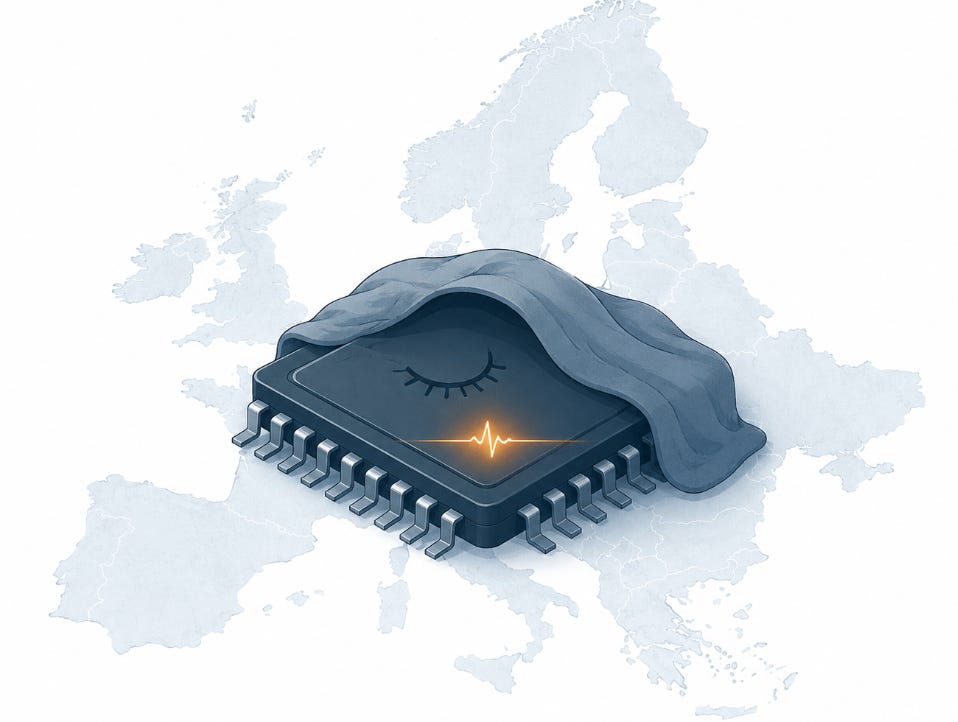
To thread this needle, a possible solution is the concept of “AI latency,” inspired by nuclear deterrence theory.
[…]
Read article in full on Lawfare.